Uv-led lights have been found to be effective in killing novel Coronavirus and HIV viruses
The same lights used in offices and public places can destroy coronavirus and HIV, according to a new study conducted by scientists at the University of Toronto scarborough campus. The researchers killed both viruses using UV-LED lights, which alternate between white light and ultraviolet (UV) light, which has bactericidal effects. With cheap modifications, they could also be used in many standard lighting fixtures, bringing a "unique appeal" to public Spaces, said Christina Guzzo, senior author of the study.
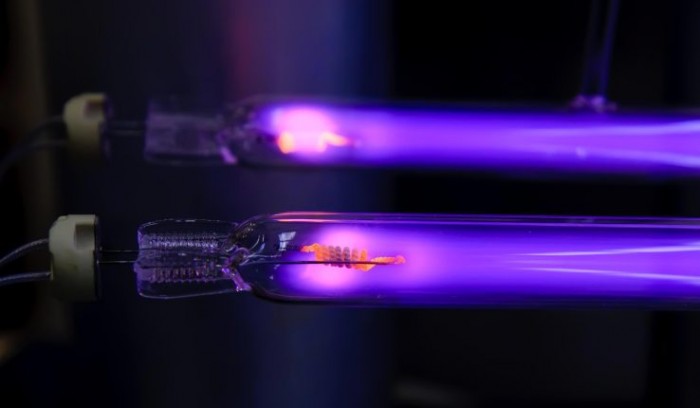
"We are at a critical point where we need to use every possible stop to get us out of this pandemic," said Guzzo, an associate professor in the school's department of biological sciences. "Every mitigation strategy that can be easily implemented should be used."
Ultraviolet lamps kill viruses by radiating them. Guzzo, along with doctoral students Arvin T. Persaud and Jonathan Burnie, first tested the lamp on spores of bacteria known to resist this radiation, called Bacillus Pumilus spores.
"If you are able to kill those spores, then you can reasonably say that you should be able to kill most of the other viruses that you encounter regularly in the environment," Guzzo said.
Within 20 seconds of uv exposure, spore growth slowed by 99 percent.
The researchers then created droplets containing coronavirus or HIV to mimic the typical way people encounter the virus in public, from coughing and sneezing. The droplets were then exposed to ultraviolet light and placed in a culture to see if any viruses remained active. After just 30 seconds of exposure, the ability to infect the virus drops by 93 percent.

When testing different concentrations of the virus, they found that samples with more virus particles were more resistant to ULTRAVIOLET light. But even with that high virality (" worst-case scenario, "Guzzo called it), infectivity dropped by 88 percent.
Although not included in the study, Guzzo and her students also compared uv light to two heavy-duty disinfectants used in laboratory studies. They found that the lights had a similar effect in their ability to inactivate the virus.
"I was really surprised that uv had the same properties as those commonly used laboratory chemicals that we consider the gold standard," she says. It made me think, 'Oh my god, this is a legitimate tool that's really underused'."
While lighting still keeps a small percentage of the virus alive, Guzzo refers to a "Swiss cheese model" for defending against COVID. Every strategy to combat transmission has its flaws, but each layer is another opportunity to stop the scattered virus particles.
Repeated exposure to ULTRAVIOLET light is key to catching these missing particles -- and fortunately, it's as easy as flipping a switch. It's also easier to change a light bulb than an air filtration system. Guzzo points out that UV-LED lights are cheap, can be easily retrofitted into existing fixtures, and the bulbs have a long life and are easy to maintain.
"You can sterilize in a way that doesn't prevent people from enjoying the daily 'normal' life they crave," Guzzo said.
The lights also benefit from automation. A standardized germicidal dose can be provided each time, and the process of wiping the space with disinfectant is subject to human error. Chemicals and waste from these disinfectants also end up in watersheds and landfills through hand washing and throwing away rags.
But light isn't harmless, and there's a reason to wear sunscreen and sunglasses -- UV radiation damages nucleic acids, and repeated, prolonged exposure is harmful. That's why Guzzo says the lights should be used when public Spaces are empty, such as when the vacated buses have finished their route, or when no one is using the elevators. Escalator handrails can be continuously disinfected by placing ultraviolet lights in the underground portion of the track, cleaning them with each turn.
Safe Antivirus Technologies, a Toronto-based startup working with Guzzo on research, is developing unique UV-LED lighting modules. Using motion sensors, the lights automatically switch to ultraviolet light when no one is in the room, and then back to normal light if there is movement.
The study, which has been published in the Journal of Virology, highlights UV-LED lights as a tool that can be used after a pandemic, and best to help prevent another.
"World events like the COVID-19 pandemic, as terrible as they are, hopefully there are still lessons to be learned," Guzzo said. One of the things we've learned is that this is an underutilized tool that we should be thinking more about implementing."
References:
https://www.cnbeta.com/articles/science/1253229.htm